
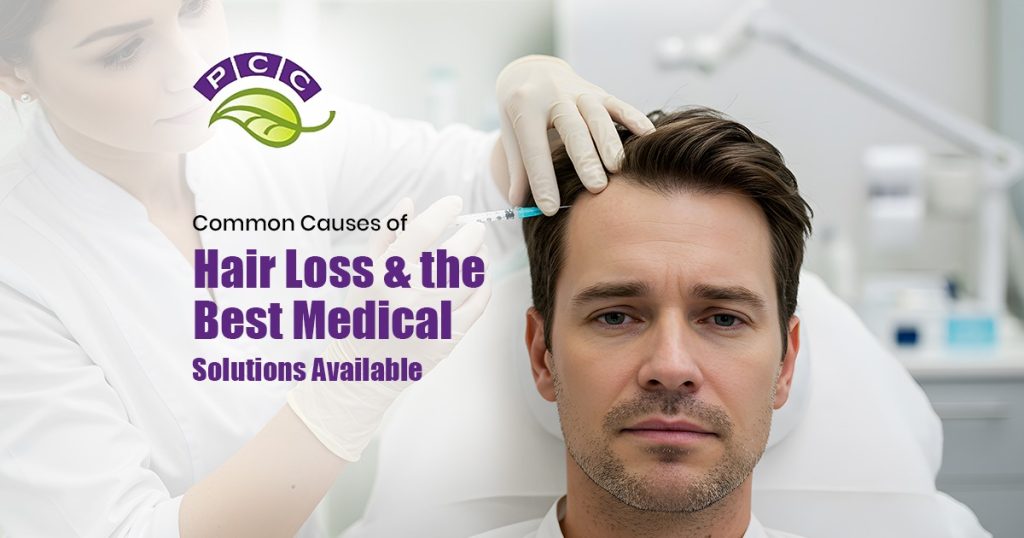
Hair loss continues to affect millions of men and women worldwide in 2026. From gradual thinning to sudden shedding, the condition can impact self-confidence and emotional well-being. Fortunately, advancements in hair loss treatment and modern medical hair restoration techniques now offer highly effective and personalized solutions. Understanding the root cause is the first step toward successful recovery.
Common Causes of Hair Loss
1. Genetic Hair Loss (Androgenetic Alopecia)
The most common cause of hair loss is hereditary pattern baldness. It affects both men and women and typically progresses gradually with age. Early diagnosis significantly improves outcomes with professional hair regrowth treatment.
2. Hormonal Imbalances
Thyroid disorders, PCOS, pregnancy, menopause and hormonal fluctuations can disrupt the hair growth cycle. Without medical intervention, this can lead to chronic thinning.
3. Stress & Telogen Effluvium
Physical or emotional stress can push hair follicles into a resting phase, causing noticeable shedding. The good news is that with timely hair loss treatment, this condition is often reversible.
4. Nutritional Deficiencies
Iron deficiency, low Vitamin D, inadequate protein intake and poor diet can weaken follicles. A proper diagnosis at the best hair clinic includes blood investigations to rule out nutritional causes.
5. Autoimmune & Medical Conditions
Conditions like alopecia areata occur when the immune system attacks hair follicles. Early medical hair restoration intervention can prevent permanent damage.
Hair Regrowth Treatments Insights
According to the International Society of Hair Restoration Surgery (ISHRS) 2022 Practice Census White Paper, there was a 92% increase in hair transplant procedures worldwide between 2019 and 2021, showing the rapidly growing demand for medical hair solutions. This data confirms that professional hair regrowth treatment and surgical restoration are becoming increasingly trusted and sought-after globally — a trend continuing strongly into 2026.
Best Medical Solutions Available in 2026
Advancements in technology have made treatments safer, more natural-looking and more effective.
1. PRP Therapy (Platelet-Rich Plasma)
PRP therapy stimulates dormant follicles using growth factors derived from your own blood. It is a highly recommended non-surgical hair loss treatment for early-stage thinning.
2. Advanced Hair Transplant (FUE & DHI)
Modern follicular extraction techniques provide permanent results with minimal scarring. These procedures form the backbone of advanced medical hair restoration in 2026.
3. FDA-Approved Medications
Clinically proven medications such as Minoxidil and Finasteride help slow hair loss and promote regrowth when prescribed appropriately.
4. Laser & Regenerative Therapies
Low-Level Laser Therapy (LLLT) improves scalp circulation and follicle activity, enhancing the effectiveness of other treatments.
5. Personalized Treatment Protocols
The best hair clinic will always create a customized treatment plan based on scalp analysis, medical history and diagnostic evaluation. One-size-fits-all solutions rarely work in hair restoration.
Why Early Intervention Matters
Hair follicles shrink progressively over time. The earlier you begin a professional hair regrowth treatment the higher the chances of preserving existing hair and stimulating natural growth. Delayed treatment may reduce non-surgical success rates.
Conclusion
Hair loss in 2026 is highly treatable — provided it is addressed correctly and early. With advancements in hair loss treatment, improved medical hair restoration techniques and evidence-based protocols offered by the best hair clinic, patients now have more effective options than ever before. If you are experiencing thinning or excessive hair fall, seeking professional evaluation today could be the first step toward restoring not just your hair — but your confidence.
1. What is the new treatment for hair loss in 2026? +
In 2026, the newest hair loss treatments focus on hair follicle cloning, stem cell/exosome therapy, and advanced regenerative medicine. These innovations aim to restore and regenerate hair follicles at a biological level, offering more effective and longer-lasting results than traditional treatments.
2. What are the top 5 reasons for hair loss? +
The top 5 reasons for hair loss are genetics (pattern baldness), hormonal imbalances, stress, nutritional deficiencies, and medical or autoimmune conditions. These factors disrupt the natural hair growth cycle, leading to thinning or excessive shedding.
3. What is the best medical treatment for hair loss? +
The best medical treatment for hair loss is usually hair transplant surgery (FUE/DHI) for permanent results, especially in genetic baldness. For early stages, FDA-approved medications like minoxidil and finasteride are highly effective in slowing hair loss and promoting regrowth.
4. What is the new hair loss cure for 2026? +
In 2026, the most promising new hair loss solution is hair follicle cloning, which aims to create and implant new follicles for long-term restoration. Advanced stem cell and exosome therapies are also emerging as powerful regenerative treatments for hair regrowth.